

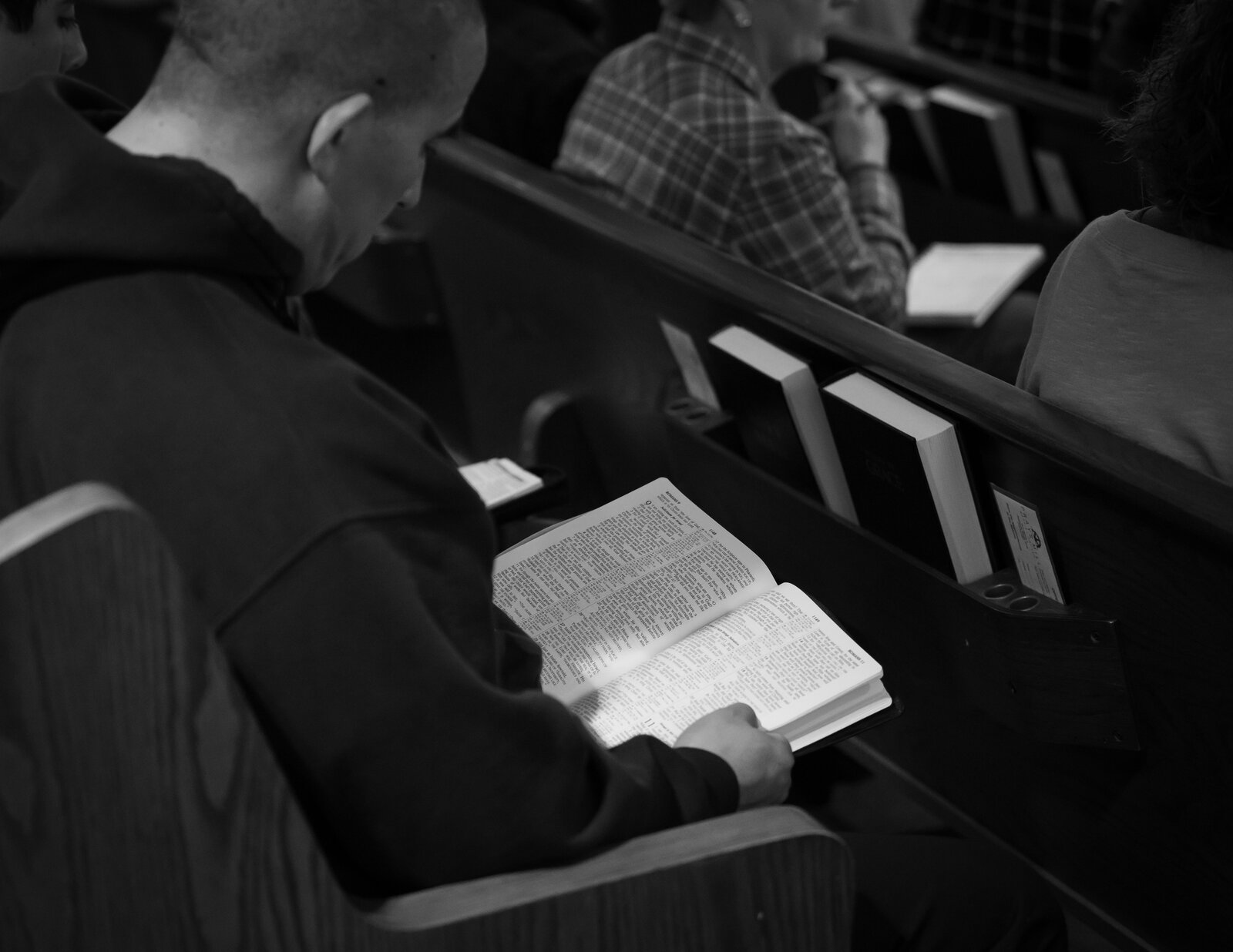
Our Worship
To Meet with the Living God
We do not gather on the Lord’s Day to perform rituals, to entertain ourselves, or to express what is already in our hearts. We gather because God has called us. Each week he summons his people from their homes and their work, washes them in the gospel, speaks to them through his Word, feeds them at his Table, and sends them back into the world with his blessing. This is the people’s work. This is the Lord’s service. It is the most important thing we do all week, because it is the place where we, the church, meet with the living God.
Our Conviction
Scripture tells us how to worship.
God has not left the worship of his church to our imaginations. He is a holy God who has revealed, in his Word, the way he is to be approached. The Second London Baptist Confession of 1689 states it simply:
The acceptable way of worshipping the true God is instituted by himself, and so limited by his own revealed will, that he may not be worshipped according to the imaginations and devices of men… or any other way not prescribed in the Holy Scriptures.
2LBCF 22.1
This is the Regulative Principle of Worship: what God has commanded in his Word, we do. What he has not commanded, we do not impose. Our liturgy is not invention; it is obedience. We read the Word, we sing the Word, we pray the Word, we preach the Word, and we see the Word at the Table.
Why We Gather
Brought near by the blood of Christ.
We do not come to corporate worship to evangelize unbelievers, energize the discouraged, or educate the curious — though by God’s grace those things happen here. We come for one reason: to commune with the God who has brought us near.
The apostle Paul tells the Gentile Ephesians, “You who were once far off have been brought near by the blood of Christ” (Eph. 2:13). The church is God’s temple, his household, his dwelling place. Sunday morning is not where we work our way toward him; it is where we, already his, draw near to renew our communion with him.
This is why we gather, and this is what we expect when we gather: God himself.
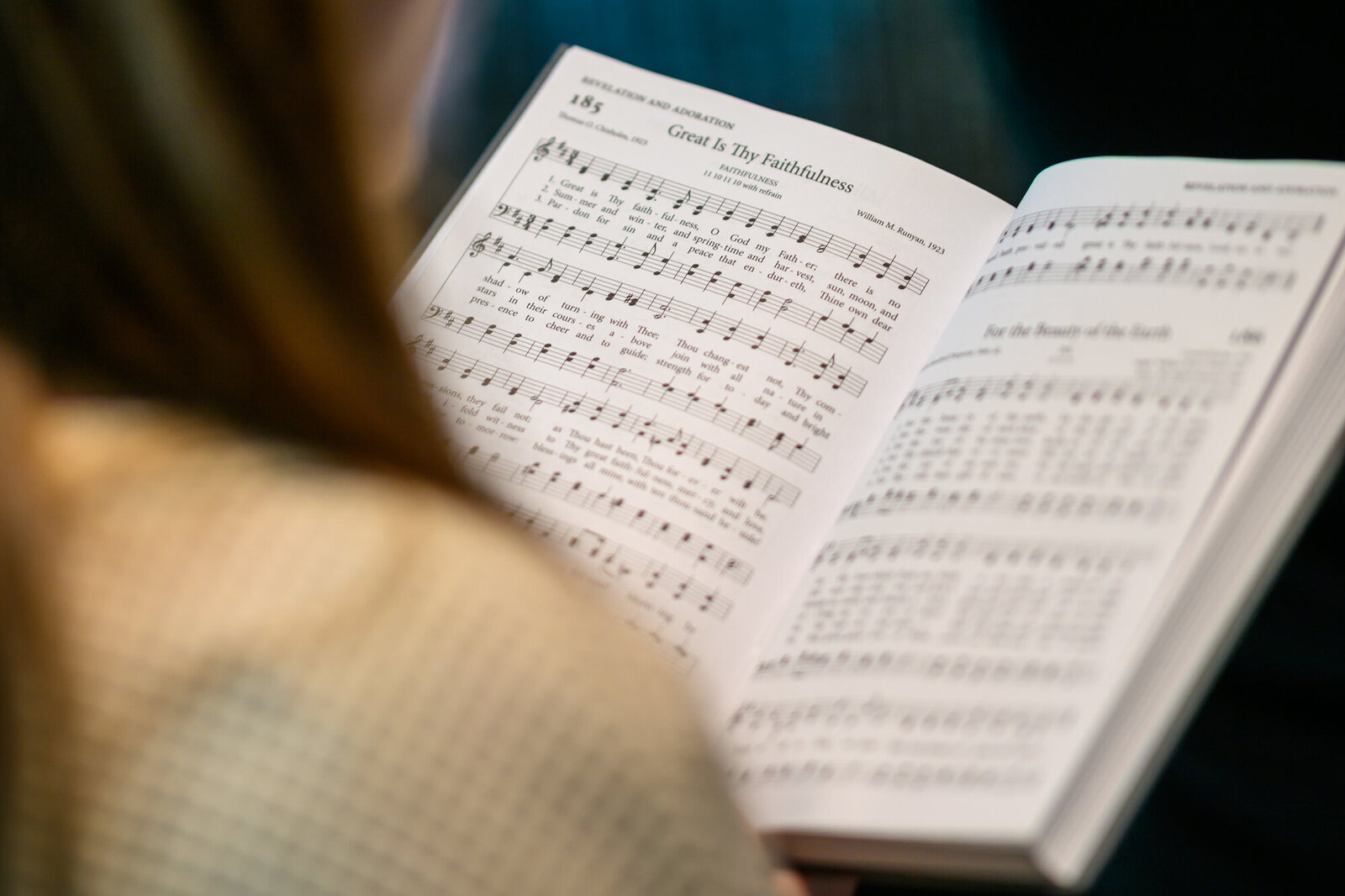
The Lord’s Service
God speaks, we respond.
Our worship follows the shape Scripture itself models. It is a conversation. God speaks first; we respond. He reveals himself; we adore. He calls us to confess our sins against him; We confess them. He declares pardon; we believe. He preaches his Word; we receive. He bids us bring ourselves; we offer. He hears our prayers. He feeds us at his Table. He sends us back into the world with his blessing.
The order of our service is not arbitrary. It is the pattern of the gospel itself, walked through every Lord’s Day. Nine movements, drawn from Scripture:
- Revelation — God calls us to worship him. (Ps. 95:1–7)
- Adoration — We exalt our glorious God. (Ps. 96:1–9)
- Confession — God calls us to confess our sins, and we confess. (1 John 1:8–9)
- Propitiation — God declares us forgiven in Christ; we praise him for our salvation. (Rom. 5:1)
- Proclamation — God speaks to us through the reading and preaching of his Word. (2 Tim. 4:1–2)
- Dedication — We respond to God’s Word in prayer, hymn, and offering. (Rom. 12:1)
- Supplication — We bring our requests before the Lord. (1 Tim. 2:1–2)
- Communion — The Lord invites us to his Table — the climax of our worship. (1 Cor. 10:16)
- Commission — God sends us forth to serve him, with his benediction. (Num. 6:24–26)
The Table is the climax. Everything else builds toward, and flows from, that moment when the risen Christ feeds his bride. See our article: How often should we take the Lord’s Supper?
The People’s Work
Worship is what we do, not what we watch.
There are no spectators in biblical worship. The pastors lead, but they do not perform. The congregation does not watch; it worships. We sing together, we pray together, we hear together, we confess together, we feast together. The Greek word for “liturgy” means “the work of the people,” and that is exactly what we are doing.
Children worship with us. They are not sent away to be entertained while their parents do the real work. They sit beside their parents in the assembly, hear the same Word read, sing the same hymns, watch the same Supper, and learn — by imitation — what it means to be a worshiper of the living God. “Let the children come to me; do not hinder them, for to such belongs the kingdom of God.” (Mark 10:14).
We are a family of families. Singles, widows, children, parents, the very old and the very young — all the saints, gathered as one body, doing the people’s work together. See our article: Should children stay in the worship service?
Why It Matters
Renewing our covenant vows weekly.
A husband and wife do not stay in love by accident. They renew their love through ten thousand small, deliberate acts — words, meals, gestures, returnings. Love that is not renewed is love that dies.
So it is between Christ and his Bride. We do not sustain our love for God by feeling deeply for him in our private moments. We sustain it by doing, week after week, the things he has commanded us to do when we gather. Reading. Singing. Praying. Preaching. Feasting. Going out. See our articles: What is the Lord’s Day? and Why we sing hymns and psalms in worship.
Corporate worship is the place where our covenant with God is renewed each Lord’s Day — and where our daily worship is fed, formed, and sent. The Christian who treats Sunday lightly cannot live well on Monday. The church that worships rightly on the Lord’s Day worships rightly all the days that follow.
Come and See
Please return often to meet with the Living God.
If you are a believer in Christ, you are welcome at our Table. If you are not, you are welcome at our service. Come and hear how God speaks. Come and see how his people respond. Come and find out what it means to be the household of God.