

How We Worship
Why We Sing Hymns
and Psalms in Worship
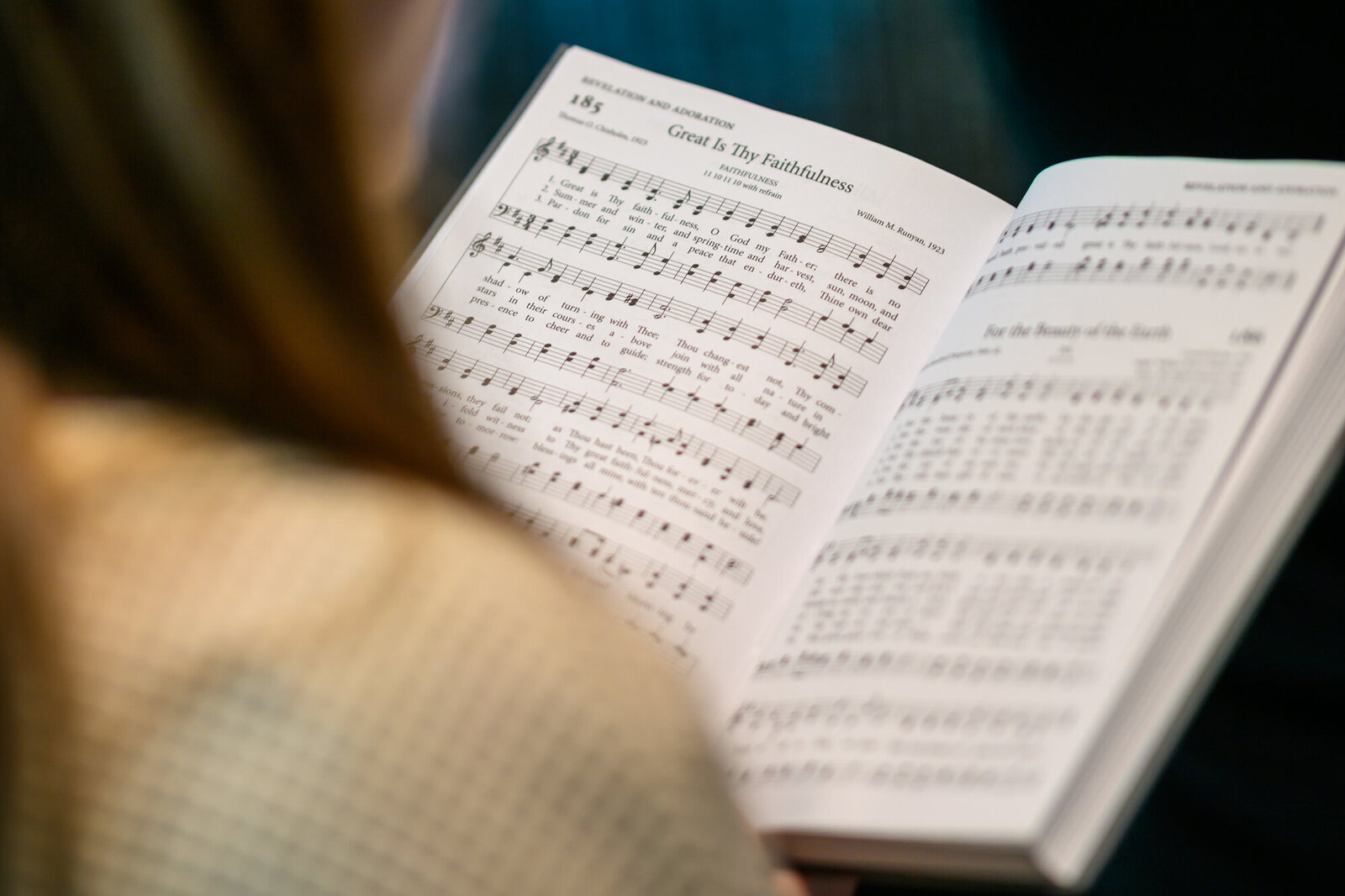
What a church sings forms what a church believes, and what a church believes forms how that church lives. The apostle Paul charges the gathered congregation to “speak to one another in psalms and hymns and spiritual songs, singing and making melody to the Lord with all your heart” (Eph. 5:19; cf. Col. 3:16). At Pray’s Mill, this charge shapes our singing in three concrete ways: we sing the historic psalms of Scripture, we sing the great hymns of the church, and we sing spiritual songs that meet the same biblical standards. We do not sing what is fashionable. We sing what is true and worthy of the God we sing to.
The Word, Set to Music
The text matters. The music matters too.
Worship music is not first about how a song makes us feel. It is first about what it says about God, and whether what it says is true. Songs sung in corporate worship will lodge in the hearts and minds of God’s people for the rest of their lives — longer than any sermon, longer than any book. They will be the prayers our children pray when they cannot find words of their own. They will be the comfort our brothers and sisters take to deathbeds.
But the music is not incidental either. Musical style and instrumentation are not matters of indifference. They form perception of the truth and shape the affections of the worshiper. A trivial tune trivializes the words it carries; a sentimental melody bends the heart toward sentimentality, whatever the lyric says. So we choose songs the way we choose what to preach: with care, with reverence, with a strong sense that words and music together shape the soul. We sing songs whose theology can bear weight, set to music fitting for the worship of the holy God. We do not sing songs whose lyrics are merely emotional, sentimental, or theologically thin — nor songs whose music undercuts the gravity of what is being said.
The Psalms
God has given his church a hymnbook.
The Psalter is the only book of inspired songs given to the church by God himself. For most of Christian history, the psalms formed the backbone of congregational singing. The Reformation rediscovered them: Calvin’s Geneva sang them weekly, the Puritans sang them, the Scots and the early New England Puritans sang them. To recover the Psalms is to recover something the church largely lost in the last two centuries.
We sing metrical psalms in their full emotional range — lament, praise, supplication, thanksgiving, imprecation. The psalms refuse to limit our worship to happy feelings; they teach us to bring the whole of our experience under God in song.
The Great Hymns
The church’s settled songbook.
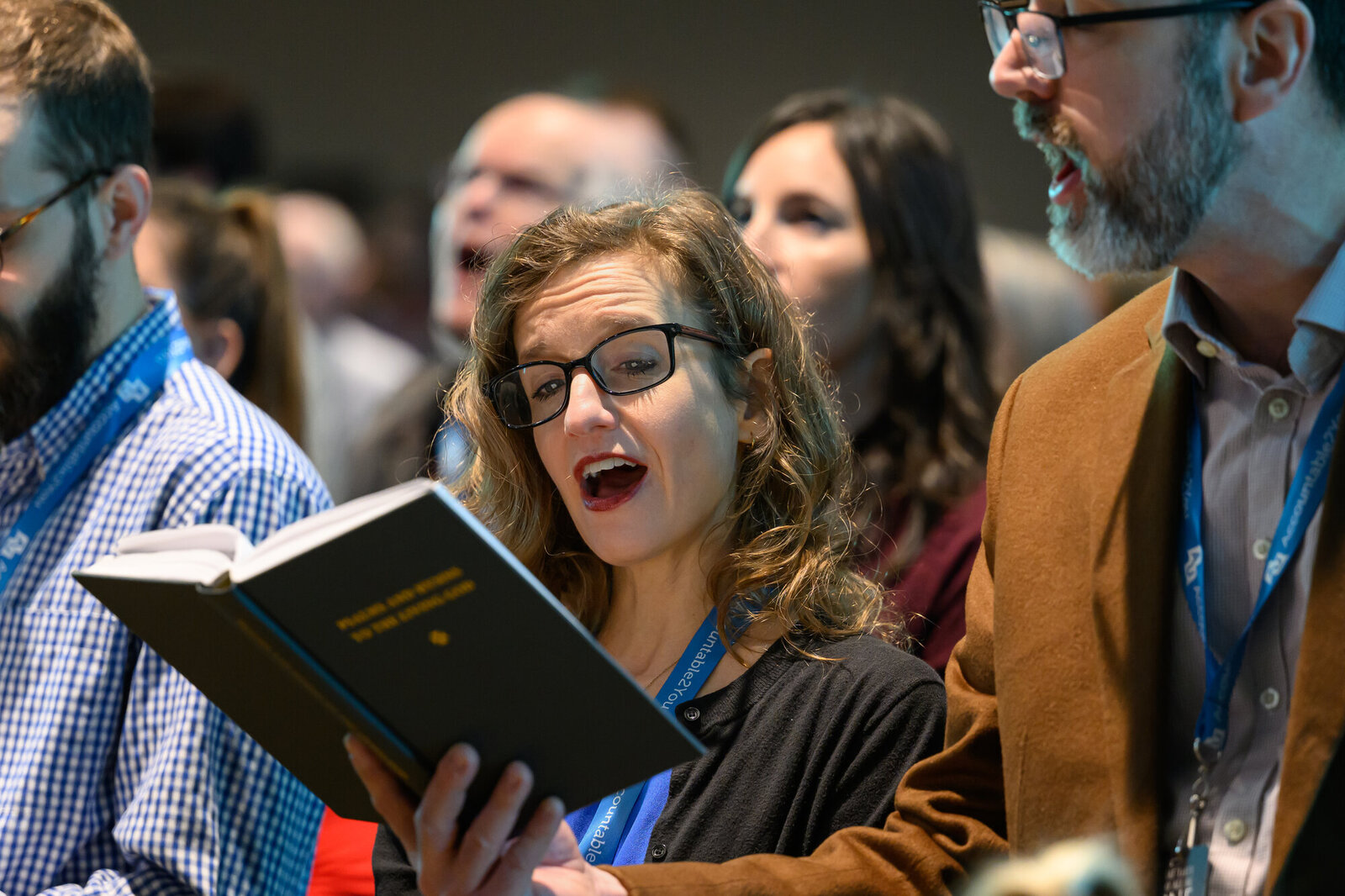
Alongside the psalms, the church has produced a body of hymns that has stood the test of centuries: Isaac Watts, Charles Wesley, John Newton, Augustus Toplady, Horatius Bonar, Anne Steele. These hymns are time-tested, doctrinally rich, congregationally singable, and they have shaped the saints of every generation that has sung them. Our pew hymnal is Psalms and Hymns to the Living God, published by G3 Press.
We also sing newer hymns — the careful, scripturally grounded work of contemporary writers. But we apply the same standards: is this song biblically accurate, doctrinally rich, congregationally singable, fitting for the worship of the holy God?
Why It Matters
Worship forms us, for good or ill.
Songs in worship are not interludes between the parts of the service that “really matter.” They are the parts that matter. The whole congregation participates: men, women, children, and elders together. There is no performance, no stage, no spectacle. There is the gathered people of God lifting up the Word of God in song to the God of the Word.
If you visit Pray’s Mill, you may not recognize every hymn we sing. That’s okay. They will be printed in a hymnal in your pew, with the music. Sing along as best you can — or simply listen. You will be hearing some of the finest words ever set to music in the English-speaking world. And you will be hearing them sung not by a worship band, but by a congregation of saints who are doing the work that God has commanded them to do.