

A Day Set Apart
What Is
the Lord's Day?
For many modern Christians, Sunday is one day among seven — squeezed between a Saturday of errands and a Monday of work, used for whatever the family happens to need at the moment. Pray’s Mill takes a different view, one shared by the historic Reformed tradition. We believe the first day of the week is a day set apart by God for his worship and for the spiritual rest of his people. We call it what Scripture calls it: the Lord’s Day (Rev. 1:10).
This brief article explains why and what it means in practice. For the fuller treatment, see chapter 22 of the 1689 Confession, “Of Religious Worship and the Sabbath Day.”
A Creation Pattern
One day in seven, set apart from the beginning.
The Sabbath did not begin at Sinai. It began at creation. “And on the seventh day God finished his work that he had done, and he rested on the seventh day from all his work that he had done. So God blessed the seventh day and made it holy” (Gen. 2:2–3). Before there was a Jewish people, before there was a law, there was a rhythm built into the fabric of creation: six days of work, one day set apart.
The fourth commandment did not invent this rhythm; it confirmed it. “Remember the Sabbath day, to keep it holy” (Ex. 20:8) — remember, because it was already there.

Why Sunday?
The day the Lord rose.
From earliest church history, Christians gathered for worship not on the seventh day of the week but on the first — the day Christ rose from the dead. The Lord’s resurrection inaugurated a new creation, and with it a new Sabbath. By the time John wrote Revelation, the first day of the week already had its name: “I was in the Spirit on the Lord’s Day” (Rev. 1:10). Paul records the church at Troas breaking bread “on the first day of the week” (Acts 20:7). Believers in Corinth were instructed to set aside their offerings “on the first day of every week” (1 Cor. 16:2).
The fourth commandment endures. What has changed is the day: from the seventh, marking creation finished, to the first, marking redemption finished and a new creation begun.
What It Looks Like in Practice
A whole day, not just an hour.
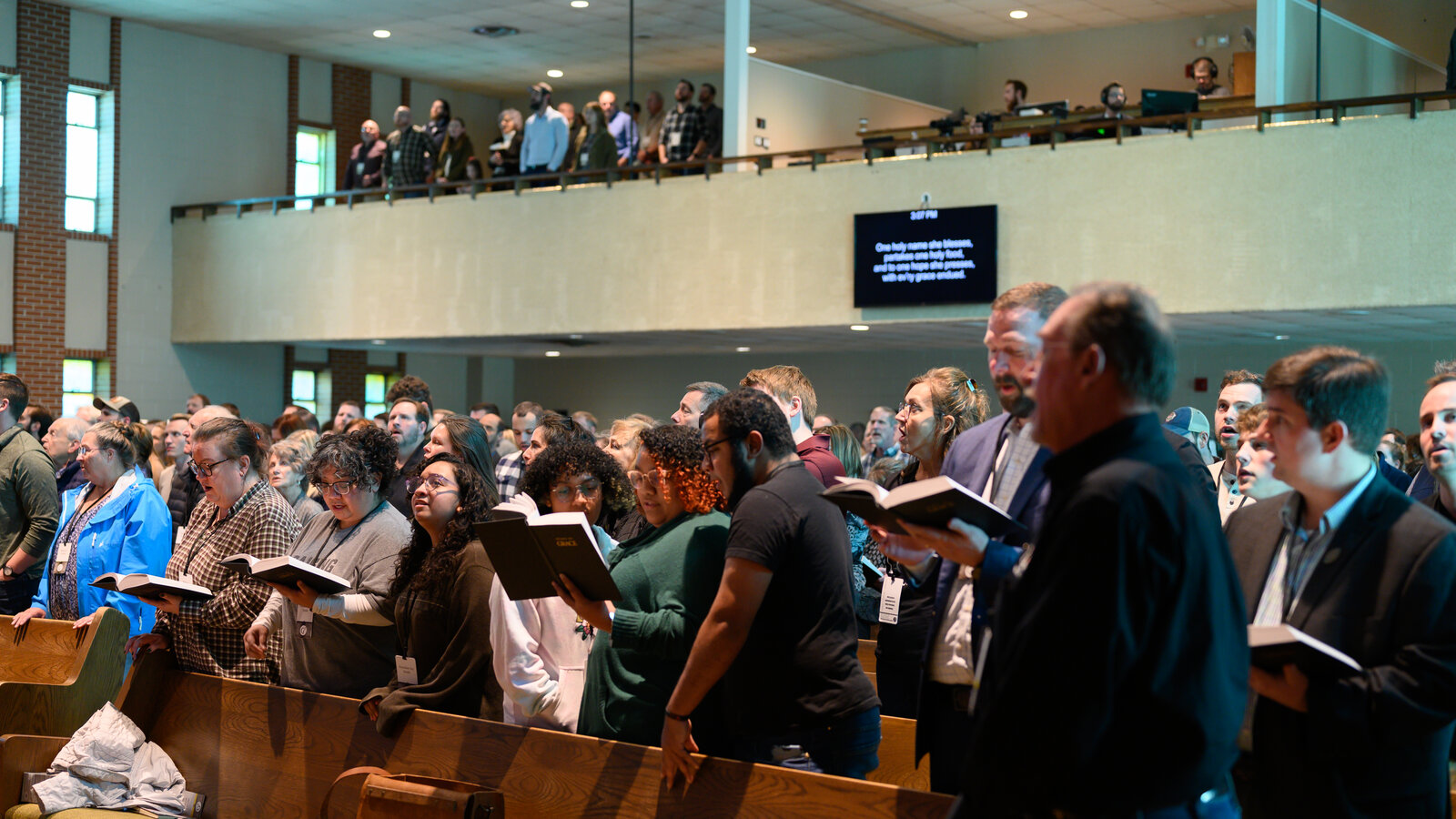
At Pray’s Mill we keep the Lord’s Day not by legalism but by joyful priority. The 1689 Confession charges believers to spend the day in “public and private exercises of his worship, and in the duties of necessity and mercy.” Practically, this means:
- We gather morning and evening for public worship.
- We rest from the work that crowds the rest of the week — commerce, ambition, the noise of striving.
- We share meals, rest, conversation, and acts of mercy.
- We do not demand a uniform external standard from one another. The Christian family next to you may keep the day slightly differently than yours — and that is fine. Romans 14 governs.
What we hold in common is the conviction that the first day of the week is the Lord’s, not ours. We do not surrender it to commerce or to leisure. We give it back to him.